
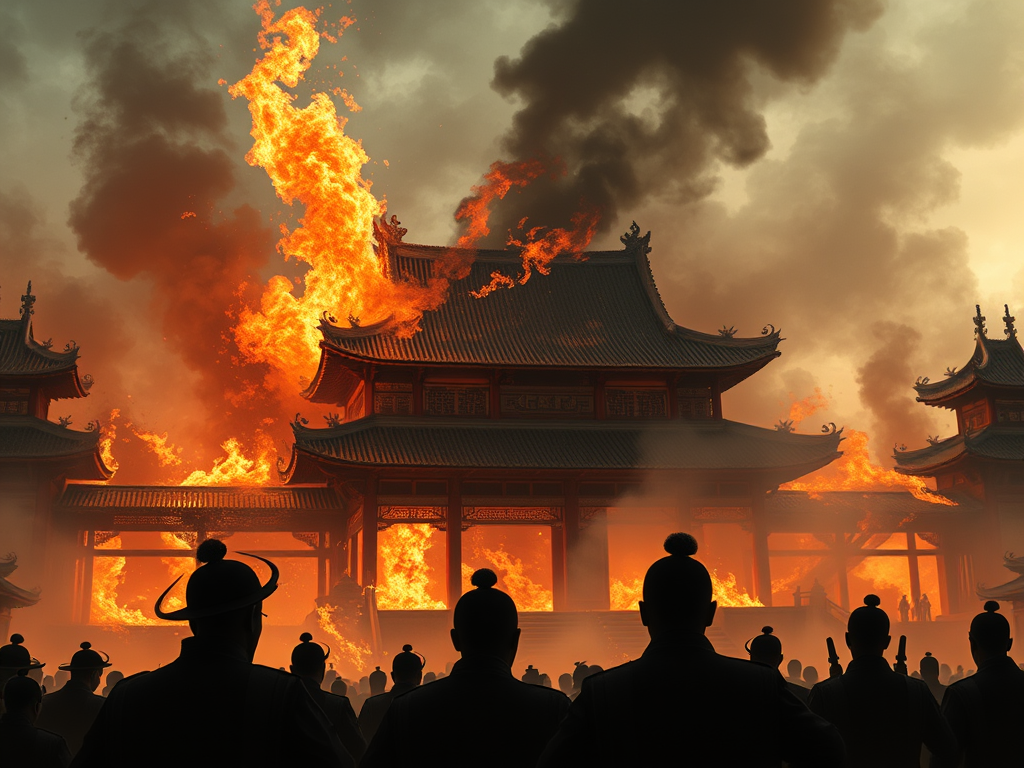
Flames and Shadows: Men Behind Palace Walls
The imperial palace becomes a war zone as angry soldiers set fire to the very heart of the Han Empire to avenge Grand General He Jin’s death. But beyond the smoke and destruction lies a deeper question: Who were the men behind these palace walls—and what did such fires mean for a dynasty’s future?
Palace Men: More Than Just Eunuchs?
In ancient Chinese courts, eunuchs were the dominant male figures inside the palace, precisely because they posed no threat of starting their own dynasties. They handled secret communications, guarded the inner chambers, and became the emperor’s closest attendants.
But they weren’t the only men within the palace. There were also:
- Scholars and tutors, often Confucian officials tasked with educating young emperors.
- Doctors, especially court physicians.
- Imperial guards, sometimes stationed inside palace gates to protect the emperor, but rarely allowed into the most private quarters.
- Envoys and attendants, often selected from noble or bureaucratic families, with temporary access.
Still, eunuchs retained unmatched access and influence, which is why they were often both powerful—and resented.
When Palaces Burn: More Than Smoke and Ash
The burning of the Han palace wasn’t the first—or last—time a royal residence went up in flames. In Chinese history, palace fires were often both literal disasters and symbolic turning points. They could be:
- Cover-ups (like destroying documents or evidence),
- Acts of war, signaling the collapse of central control,
- Or curses, interpreted by the people as heaven’s judgment on a corrupt regime.
Similar scenes occurred in the Tang Dynasty, when the An Lushan Rebellion led to the looting and destruction of palaces, and again in the Ming Dynasty, when Li Zicheng’s rebels set fire to Beijing’s inner court.
Western Echoes: The Fall of Palaces
Western history offers parallels—Versailles was abandoned during the French Revolution, or the Roman Senate House was burned during riots. Each time, a palace in flames meant more than destruction—it signaled the collapse of an era.
Conclusion: When the Heart of Empire Burns
When the inner sanctum falls to fire, it’s not just walls that crumble—it’s legitimacy, memory, and the center of power itself. And once that fire starts, no dynasty escapes unscathed.
The book, “Ancient Minds, Modern Lessons: Timeless Psychology from the Three Kingdoms,” further explores these concepts.


Leave a Reply