
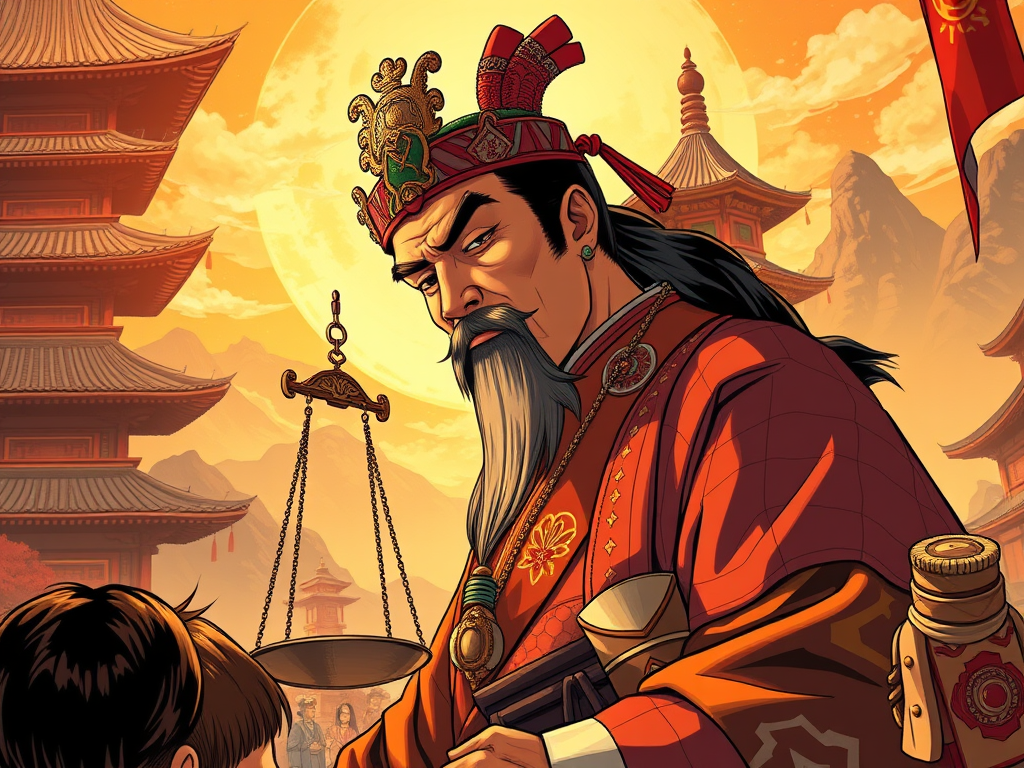
The Tilted Head and the Tilted Scale: Power, Class, and Confucian Hierarchy in China
In the chapter titled “The Tilted Head” of Eunuchs, Usurpers, and Heroes: A Three Kingdoms Thriller, the novel presents a significant scene. It reveals an important moment. Warlord Dong Zhuo was drunk with power. He looked down—literally and figuratively—on ordinary people without titles. However, this wasn’t just a matter of personal arrogance—it reflected a deeply ingrained social structure in Chinese society.
Officials First: Confucianism and the Rise of the Bureaucratic Class
Under Emperor Wu of Han (Liu Che), Confucianism became the state ideology. With it came a rigid classification of people. Scholars and officials—those who passed imperial exams or held government posts—were placed at the top of the social pyramid. Farmers were below them. Next came artisans. Finally, merchants and laborers were perceived as prioritizing their own profit over the well-being of society.
This system is often summarized today as “Guan Ben Wei” (官本位), meaning “officials above all.” It left a profound cultural imprint that persists in modern China. Government jobs still carry a sense of prestige, and people with official titles (even minor ones) often receive special treatment.
The book, “Ancient Minds, Modern Lessons: Timeless Psychology from the Three Kingdoms,” further explores these concepts.



Leave a Reply